
Introduction
Digital marketing continues to evolve rapidly, and in 2026, businesses need more than just a website or occasional social media posts to stay competitive. Success depends on using the right tools to attract customers, improve productivity, analyze performance, and make smarter marketing decisions.
Whether you’re a small business owner, freelancer, startup founder, or digital marketer, choosing the right marketing tools can save time, reduce costs, and significantly improve your results. However, with hundreds of platforms available, selecting the best ones can feel overwhelming.
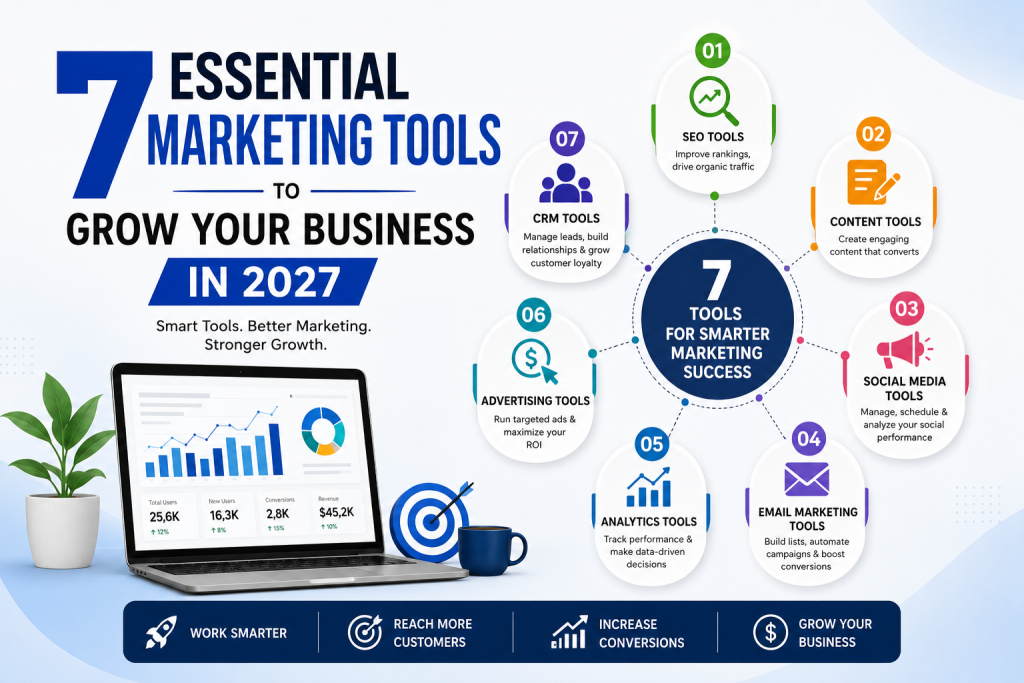
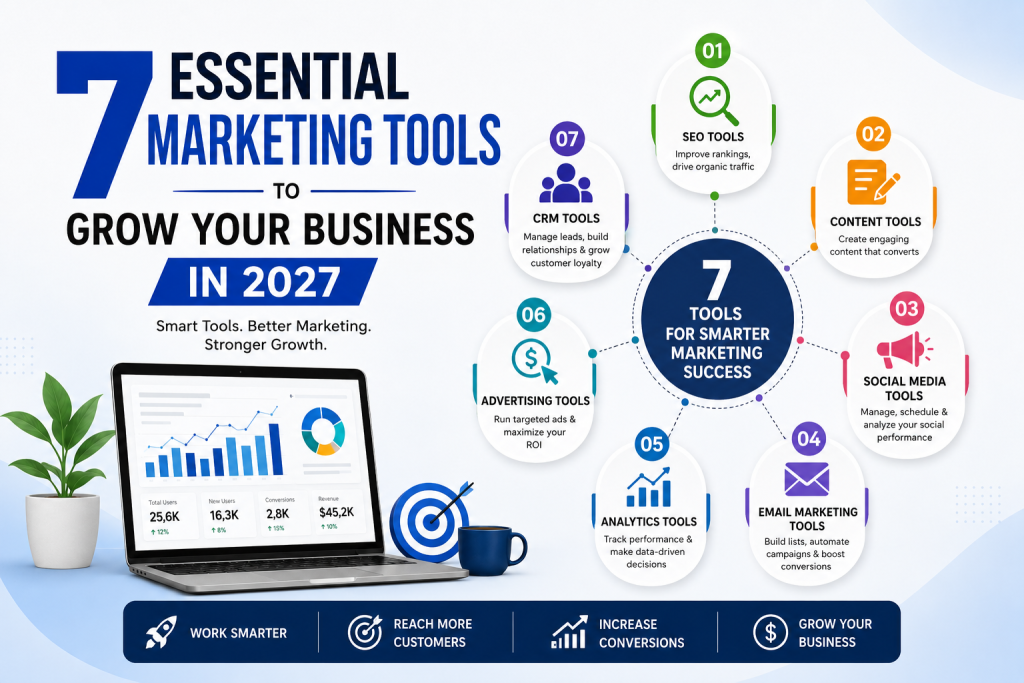
In this guide, we’ll explore seven essential marketing tool categories every business should use in 2026. These tools will help you improve SEO, create better content, manage social media, automate email marketing, analyze data, run profitable advertising campaigns, and build stronger customer relationships.
1. Fuel Your SEO Success with Smart Tools
Search Engine Optimization (SEO) is the backbone of digital marketing. Even the best website or blog won’t generate traffic if people can’t find it on search engines.
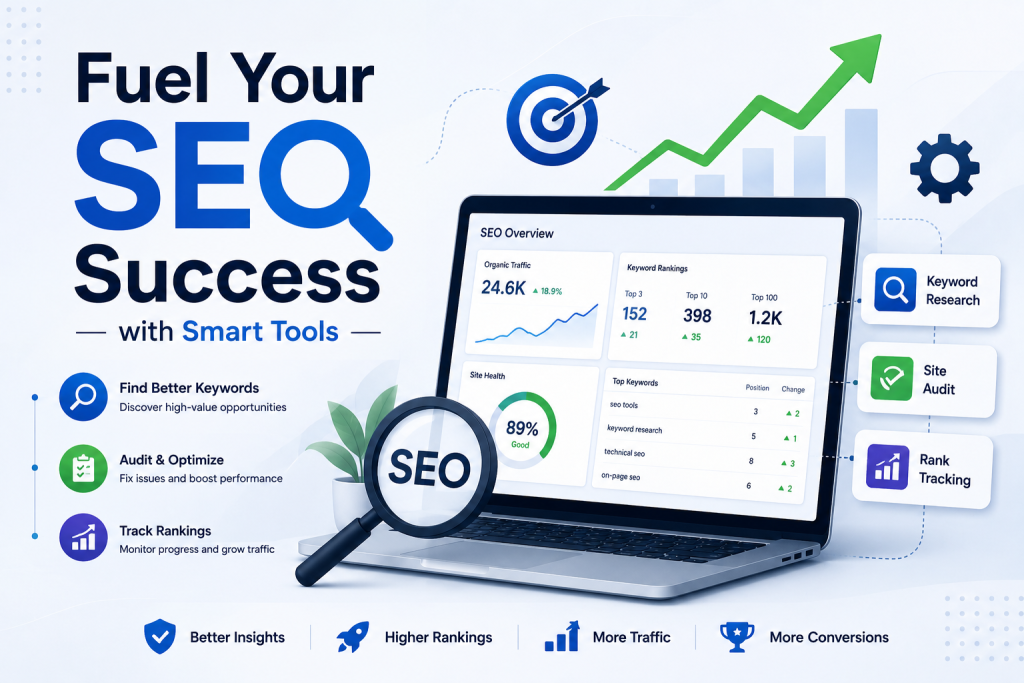
SEO tools help businesses understand what their audience is searching for, improve website performance, and achieve higher rankings on Google.
Find High-Value Keywords
Keyword research is the first step of every successful SEO strategy. Marketing tools provide valuable insights into:
- Search volume
- Keyword difficulty
- Search intent
- Long-tail keyword opportunities
For example, instead of targeting a broad keyword like “cakes,” a local bakery could target “custom birthday cakes near me” to attract more relevant customers.
Perform Technical SEO Audits
Your website should be fast, mobile-friendly, and error-free.
SEO audit tools help identify:
- Broken links
- Slow-loading pages
- Duplicate content
- Mobile usability issues
- Missing meta tags
Regular audits ensure your website remains optimized for both users and search engines.
Track Keyword Rankings
Monitoring keyword rankings helps you understand which pages are performing well and where improvements are needed.
By tracking rankings regularly, you can adjust your SEO strategy based on real performance data.
2. Improve Your Content Strategy

Content remains one of the most powerful marketing assets. High-quality content builds trust, increases website traffic, and generates leads.
Content marketing tools help you research topics, improve writing quality, and optimize content for search engines.
Discover Trending Topics
Content research tools help you identify:
- Popular industry topics
- Trending keywords
- Frequently asked questions
- Competitor content
Creating content around topics people are actively searching for increases your chances of attracting organic traffic.
Create Better Content Faster
Writing assistants simplify the content creation process by helping you:
- Correct grammar
- Improve sentence structure
- Enhance readability
- Maintain a professional tone
AI-powered writing tools can also help generate ideas, but your final content should always reflect your unique brand voice.
Optimize for SEO
SEO writing tools suggest improvements such as:
- Better keyword placement
- Optimized headings
- Improved meta descriptions
- Readability enhancements
Well-optimized content ranks better and provides a better experience for readers.
3. Grow Faster with Social Media Management Tools
Managing multiple social media platforms manually can be time-consuming.
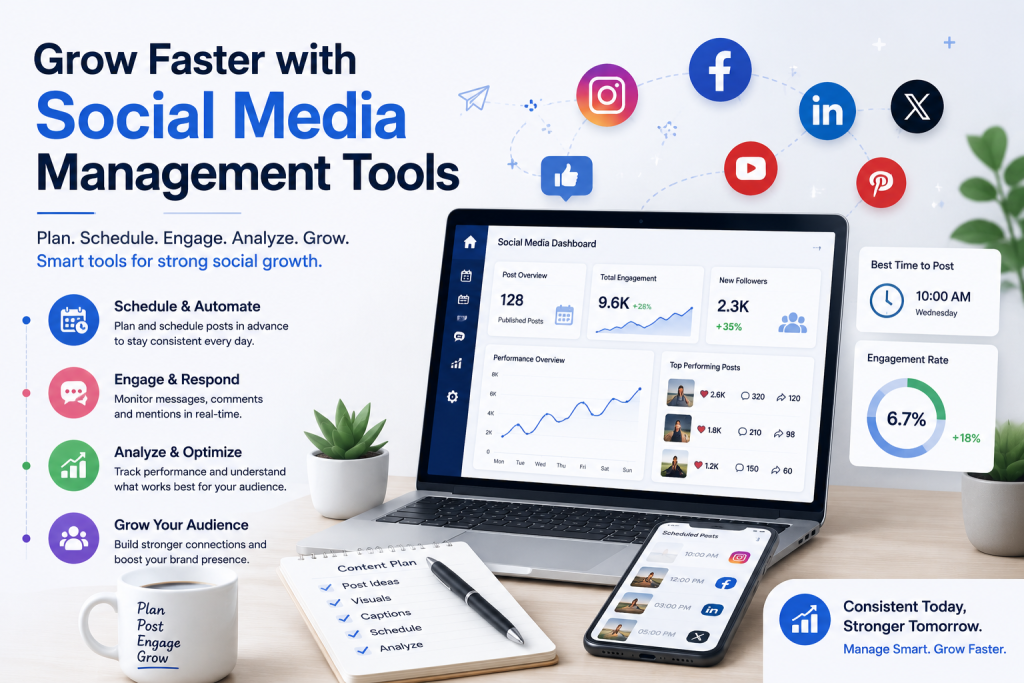
Social media management tools help businesses schedule posts, monitor engagement, and measure campaign performance.
Schedule Posts in Advance
Instead of posting manually every day, scheduling tools allow you to plan weeks or even months of content ahead.
Benefits include:
- Consistent posting
- Better time management
- Improved audience engagement
Monitor Brand Mentions
Social listening tools help businesses monitor:
- Customer feedback
- Brand mentions
- Industry conversations
- Competitor activity
Responding quickly to customer comments improves brand reputation and customer satisfaction.
Measure Social Media Performance
Analytics dashboards reveal:
- Engagement rates
- Reach
- Clicks
- Best-performing content
These insights help marketers focus on strategies that deliver the best results.
4. Increase Sales with Email Marketing
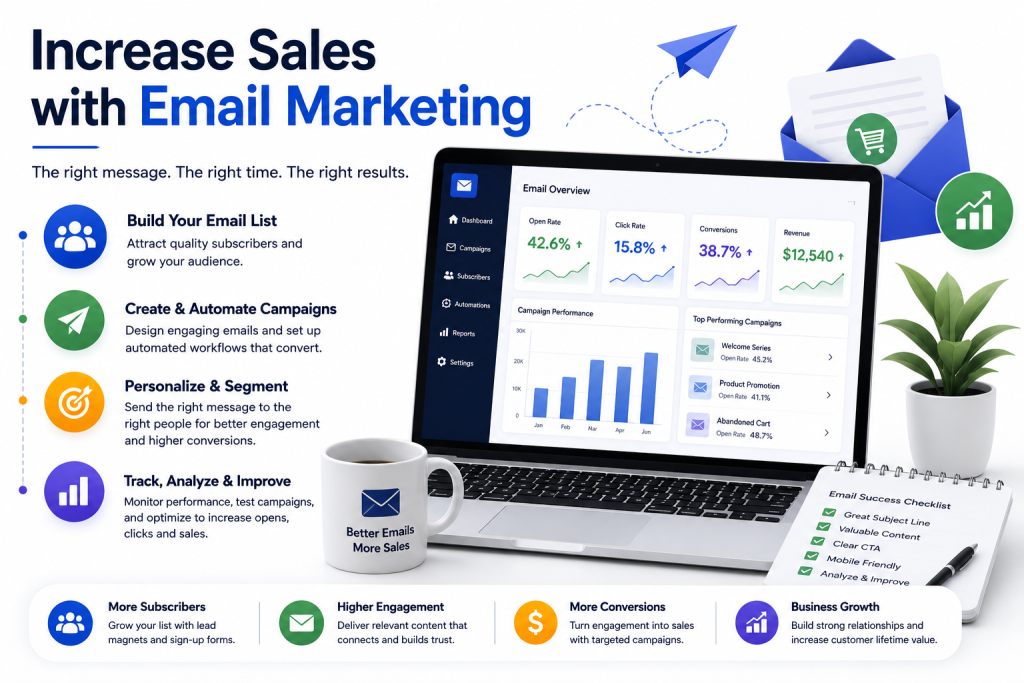
Email marketing continues to deliver one of the highest returns on investment in digital marketing.
It helps businesses nurture leads, retain customers, and increase repeat purchases.
Build Targeted Email Lists
Growing an email list is only the first step.
Modern email marketing tools allow you to segment subscribers based on:
- Interests
- Purchase history
- Location
- User behavior
Personalized emails perform significantly better than generic campaigns.
Automate Email Campaigns
Automation saves time while improving customer experience.
Popular automated campaigns include:
- Welcome emails
- Abandoned cart reminders
- Product recommendations
- Birthday offers
- Follow-up emails
Automation ensures customers receive the right message at the right time.
Track Campaign Performance
Successful email marketers regularly analyze:
- Open rates
- Click-through rates
- Conversion rates
- Unsubscribe rates
Continuous testing helps improve future campaigns.
5. Make Better Decisions with Analytics Tools
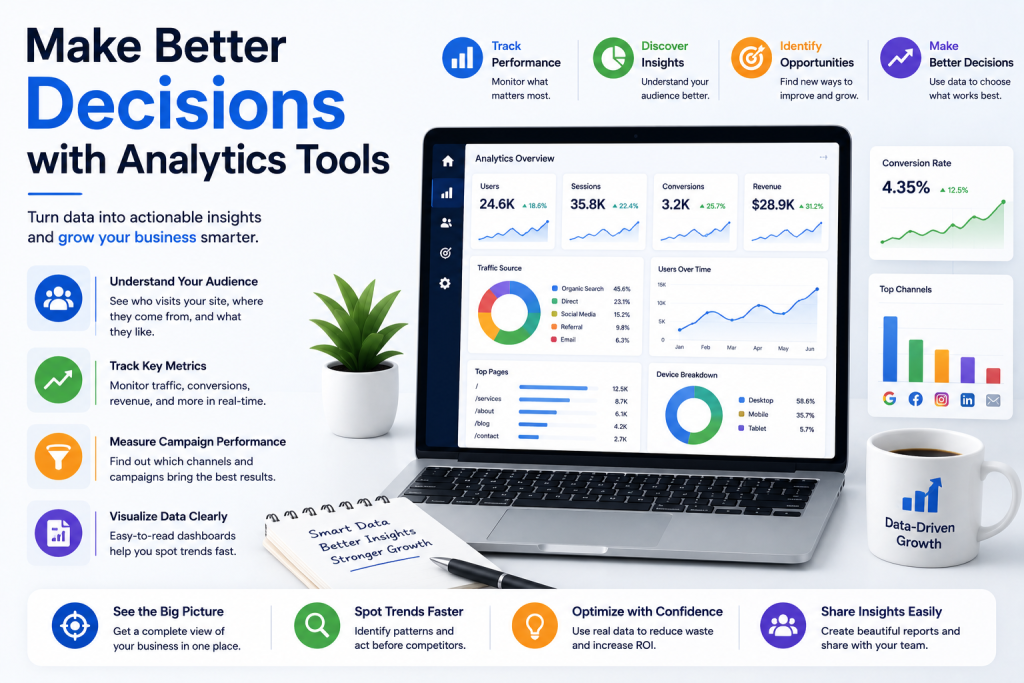
Without data, marketing becomes guesswork.
Analytics tools help businesses understand how visitors interact with their websites and campaigns.
Analyze Website Traffic
Website analytics reveal:
- Visitor sources
- Most popular pages
- Bounce rates
- Session duration
- Conversion paths
These insights help identify opportunities for improvement.
Measure Marketing Campaigns
Businesses often run campaigns across multiple channels.
Analytics tools combine data from:
- Google Ads
- Social media
- Email marketing
- Organic search
This allows marketers to identify which channels generate the highest return on investment.
Visualize Performance
Modern dashboards convert complex data into easy-to-understand charts and reports, making it easier to monitor business growth.
6. Maximize ROI with Advertising Tools
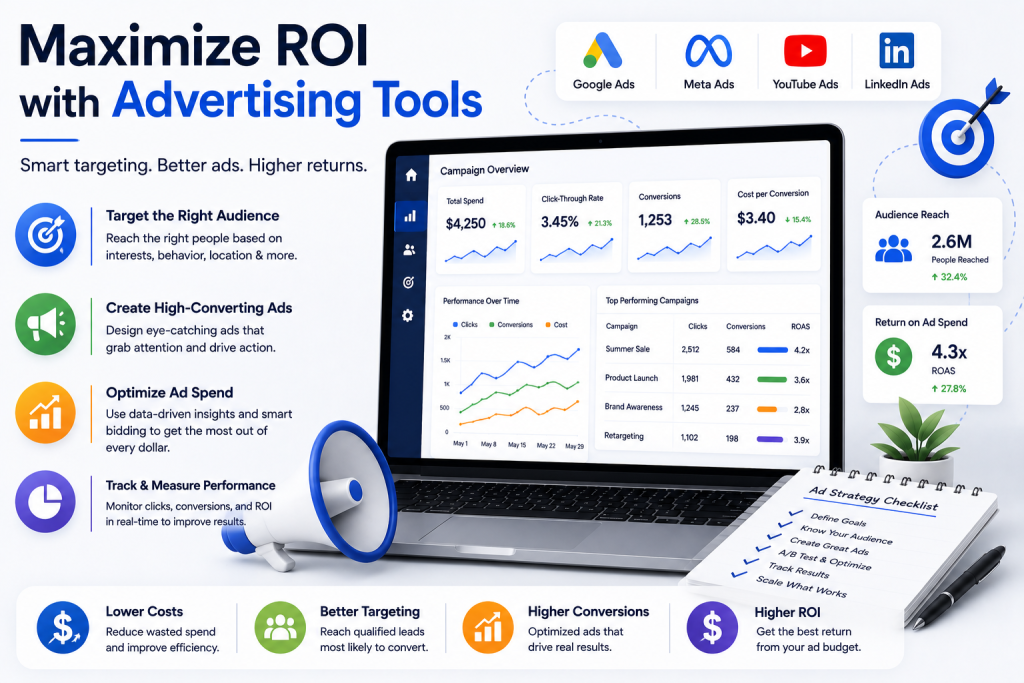
Paid advertising delivers fast results when managed effectively.
Advertising platforms help businesses reach highly targeted audiences while maximizing marketing budgets.
Target the Right Audience
Modern advertising tools allow businesses to target users based on:
- Demographics
- Interests
- Location
- Online behavior
Better targeting leads to higher conversions and lower advertising costs.
Create High-Converting Ads
Successful advertisements require:
- Eye-catching visuals
- Strong headlines
- Clear calls-to-action
- Relevant offers
Creative design tools make it easier to produce professional ad creatives.
Optimize Advertising Budgets
Advertising platforms provide automatic bidding strategies and performance recommendations to help businesses reduce costs while increasing conversions.
Regular optimization ensures every advertising dollar delivers maximum value.
7. Build Strong Customer Relationships with CRM Tools
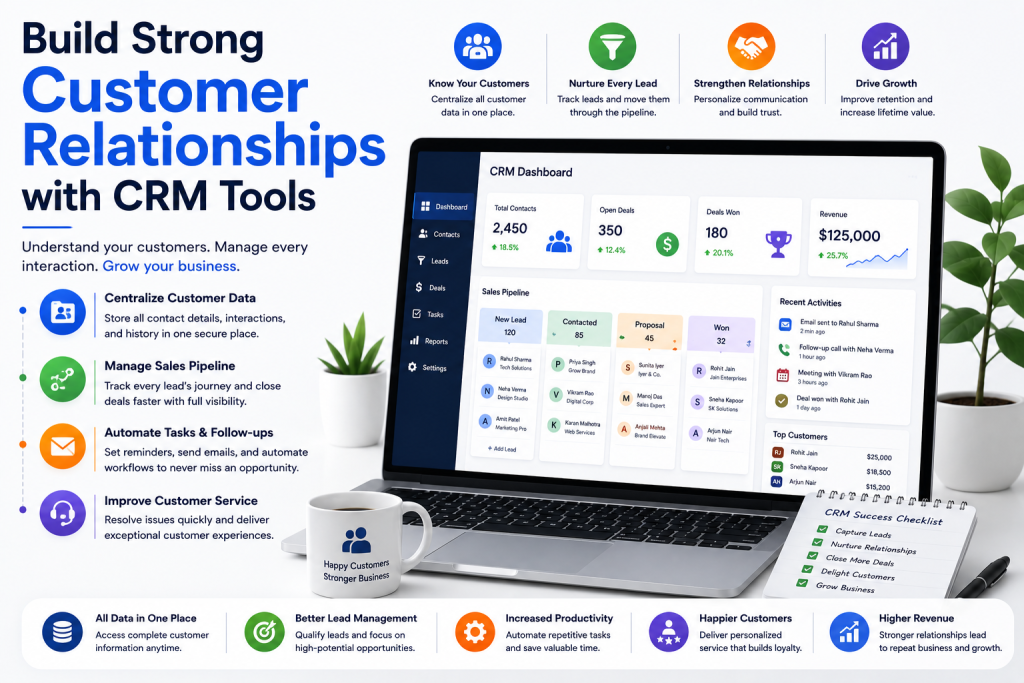
Customer Relationship Management (CRM) software helps businesses organize customer information and improve communication.
A CRM ensures that every lead and customer interaction is stored in one centralized location.
Manage Customer Data
CRM systems organize:
- Contact information
- Purchase history
- Communication records
- Customer preferences
Having all customer data in one place improves efficiency and personalization.
Track Sales Pipelines
CRM platforms help businesses monitor every stage of the customer journey—from the first inquiry to the final purchase.
This reduces missed opportunities and improves sales performance.
Improve Customer Retention
Providing personalized support strengthens customer relationships.
Happy customers are more likely to:
- Return for future purchases
- Recommend your business
- Become loyal brand advocates
A CRM helps businesses deliver better customer experiences while increasing long-term revenue.
Why These Marketing Tools Matter in 2027
Digital marketing is becoming more competitive every year. Businesses that rely on manual processes often struggle to keep up with changing customer expectations and increasing competition.
Using the right marketing tools helps you:
- Improve productivity
- Save valuable time
- Automate repetitive tasks
- Make data-driven decisions
- Increase customer engagement
- Generate more leads
- Boost conversions
- Scale your business efficiently
Instead of replacing marketers, these tools empower them to work smarter and achieve better results.
Conclusion
The digital marketing landscape in 2026 is more dynamic than ever, making the right set of tools essential for long-term business success. Whether your goal is to improve search engine rankings, create engaging content, manage social media, automate email campaigns, analyze customer behavior, run profitable advertising campaigns, or build stronger customer relationships, the right marketing tools can make all the difference.
Rather than trying to use every platform available, focus on the tools that align with your business goals and marketing strategy. Start with the areas where your business needs the most improvement, and gradually expand your toolkit as your business grows.
Remember, marketing tools alone don’t guarantee success—they are most effective when combined with a clear strategy, consistent effort, and a deep understanding of your audience. By investing in the right technology and continuously optimizing your marketing approach, you’ll be well-positioned to stay ahead of the competition and achieve sustainable growth throughout 2026 and beyond.